As President Donald Trump weighed military action in Venezuela, bolstering troops in the Caribbean and flying B-52 bombers along the country’s coast over the past week, Venezuelan President Nicolás Maduro responded in kind.
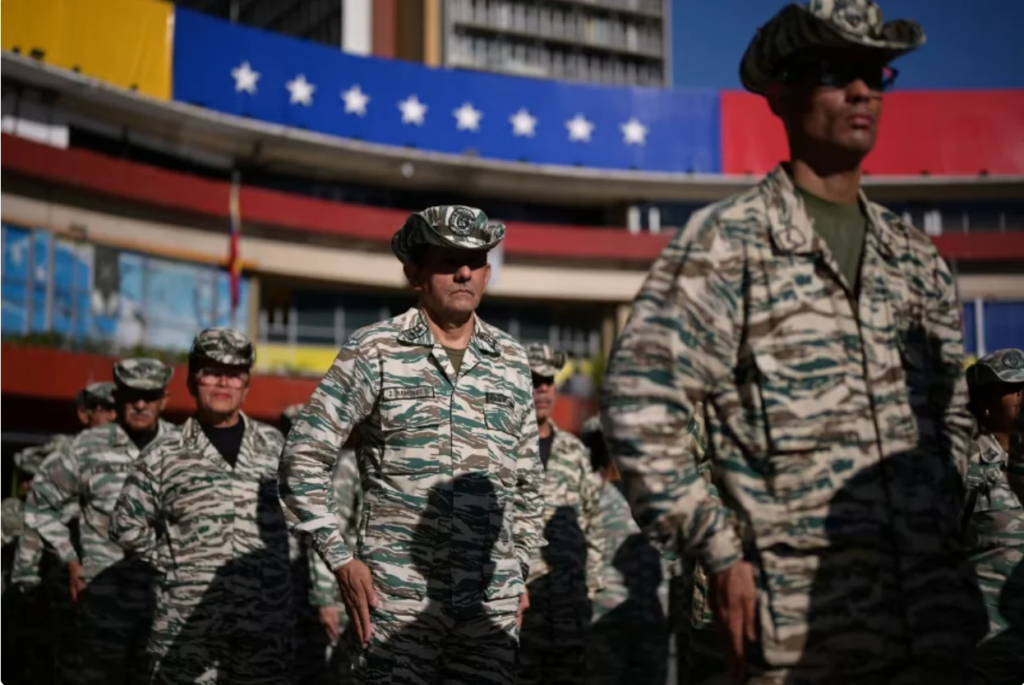
Maduro has redeployed troops, mobilized “millions” of militiamen and denounced US activity in the region, a sign of defiance from the hard-line leader amid a bitter standoff between the two sides.
Trump administration officials privately acknowledge that the escalating US pressure campaign is aimed at ousting Maduro—a goal the White House has pursued since Trump’s first term, when Washington recognized opposition leader Juan Guaidó as Venezuela’s legitimate president in 2019.
However, as the Trump administration ramped up pressure this fall, Maduro stepped up his domestic rhetoric and called on the Bolivarian National Army, which has about 123,000 troops, to conduct new exercises.
In recent weeks, the US military has sent warships and weapons to the region and attacked vessels off Venezuela’s coast that it says are transporting drugs. On Wednesday, Trump confirmed that he had authorized the CIA to conduct covert operations in Venezuela and said the US was considering an attack on the country’s territory. “Of course we are considering a land operation, because we have very good control of the sea,” Trump told reporters on Wednesday.
Venezuela increases military mobilization
Maduro claims his volunteer militia has more than 8 million reservists, though experts question both the number and the quality of its training. As of October 17, 20 of Venezuela’s 23 states had been militarized as part of a mobilization dubbed Independence 200.
The Trump administration has been quietly preparing the legal and public grounds for a possible military intervention for months, linking Maduro to drug cartels and criminal organizations that the US has designated as terrorist organizations that threaten national security. But so far there has been no indication that Trump has decided to take military action or directly target Maduro.
Instead, according to CNN sources, Washington’s goal is to force Maduro to back down — in part by creating a credible military threat if he doesn’t.
Recent attacks on drug smuggling vessels in the Caribbean, the source said, were a clear message to Maduro. The Trump administration has also been keen to highlight his links to smuggling networks.
Trump added on Wednesday that he had authorized the CIA to operate inside Venezuela to stem the flow of migrants and drugs from the South American country, but did not confirm whether it was seeking to overthrow the South American leader. It was Trump’s most detailed statement yet on the decision to expand the CIA’s powers to carry out covert operations and targeted attacks in the region.
In a televised address the same day, Maduro criticized the CIA’s record of “regime change and coups” around the world. “But our people are wise, united and vigilant. They have the means to once again defeat this open plot against the peace and stability of Venezuela,” he said on national television.
Fears of Widespread War
In Venezuela, daily life continues despite the threat of armed conflict with the United States. Near the center of Caracas, the Teresa Carreño theater was packed for a new musical premiere, just days after a massive salsa party drew more than 1,000 people in the west of the city.
But Venezuelans are increasingly talking about US warships in the Caribbean and fearing a possible attack. “Venezuelans live in fear of what’s coming,” said Ivonne Caña.
Caña, a chef, said she lives in a state of uncertainty and has stocked up on food out of concern for her family. “At night, the fear is greatest — we can’t sleep,” she said.
Some Venezuelans have cautiously expressed support for the US pressure campaign against Maduro. In recent days, banners bearing pro-opposition messages have appeared at at least 10 universities across the country—a form of peaceful protest.
Meanwhile, Venezuela’s president continues to tighten his grip on society. In late September, the government announced that the president had signed a decree on “external disturbance,” which he described as “a constitutional defense in case of military attack.”
As Maduro accused the United States of trying to “rob Venezuela of its oil resources,” American military forces moved closer. Three US Air Force B-52 bombers flew off the coast of Venezuela for more than four hours on Wednesday, according to public flight data verified by CNN. At their closest point, the planes were just 132 miles from Venezuela’s mainland.